
For years, artificial intelligence has been promoted as the next big breakthrough in fleet management. The reality, however, has often been far less impressive. Many operators have been presented with dashboards containing thousands of data points, hundreds of reports and endless alerts, yet still found themselves spending hours trying to identify the information that actually matters. That may now be beginning to change.
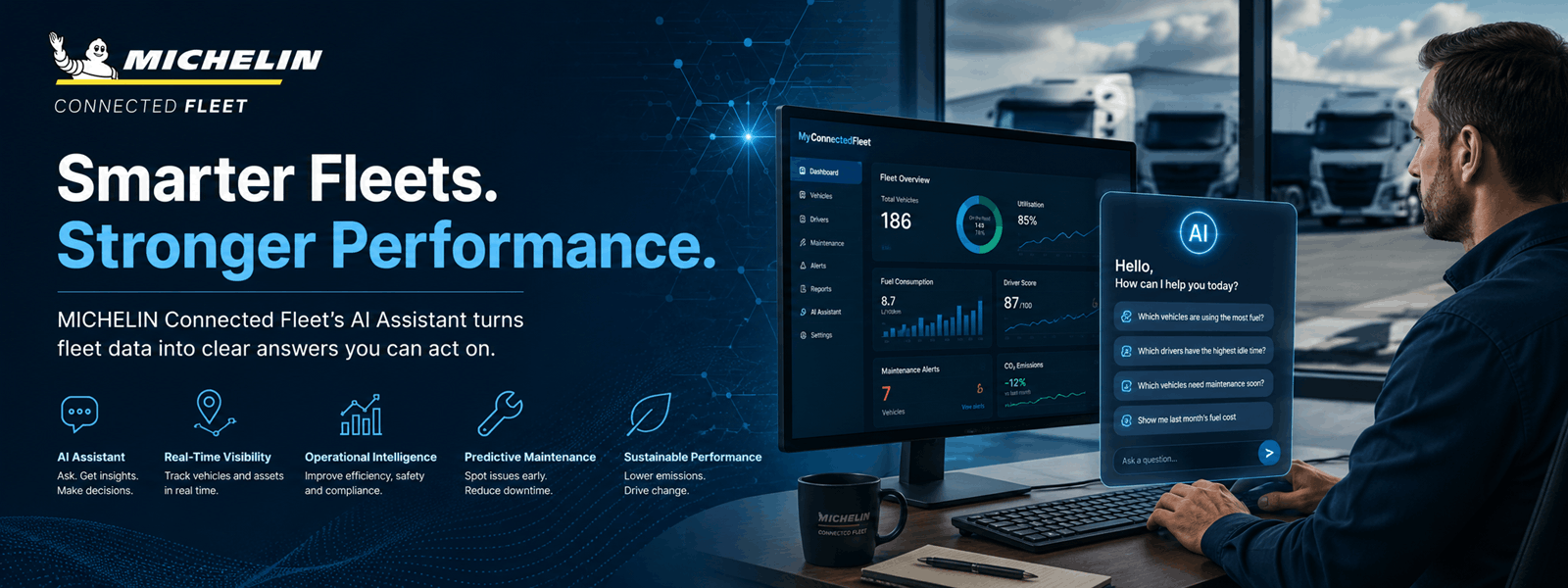
MICHELIN Connected Fleet has announced the rollout of its new MICHELIN AI Assistant, integrated directly into its MyConnectedFleet platform, allowing fleet managers to ask operational questions in natural language and receive immediate answers based on their fleet data. Rather than manually generating reports, managers can simply ask questions such as which vehicles are consuming the most fuel, which drivers are experiencing excessive idling or which assets require maintenance attention.
While the technology itself is significant, the wider implication for the transport industry may be even more important.
A Shift Away from Dashboards
The commercial fleet sector has invested heavily in connected vehicle technology over the past decade.
- GPS tracking.
- Driver behaviour monitoring.
- Fuel reporting.
- Maintenance scheduling.
- Route optimisation.
- Telematics.
Most medium and large fleet operators now collect enormous volumes of operational data every day. The challenge has never been collecting information. The challenge has been turning that information into decisions. Fleet managers often spend valuable time navigating multiple dashboards, exporting reports and interpreting performance metrics before action can be taken.
Artificial intelligence has the potential to remove much of that administrative burden. Instead of searching for information, operators simply ask. The software interprets the request, analyses operational data and returns an immediate response. That represents an important evolution in how fleet technology is used.
From Data Collection to Decision Support
Historically, fleet management platforms have focused on answering the question:
“What happened?”
Modern AI platforms are increasingly focused on answering:
- What should I look at today?
- Which vehicles require attention?
- Which drivers need coaching?
- Where am I losing money?
- Which maintenance issues present the greatest operational risk?
This moves fleet technology beyond tracking assets towards actively supporting operational decision-making. Rather than replacing fleet managers, AI has the potential to remove much of the manual analysis that consumes their working day.
Why This Matters for Operators
Margins across the transport sector remain under pressure.
- Fuel costs.
- Insurance premiums.
- Driver shortages.
- Compliance obligations.
- Vehicle maintenance.
- Customer expectations.
Every percentage improvement in operational efficiency has a measurable commercial impact. If artificial intelligence can reduce administrative workload while helping operators identify fuel savings, maintenance issues or driver performance trends more quickly, the technology becomes considerably more valuable than simply generating another report.
According to Michelin, the AI Assistant is designed to provide immediate access to operational insights through a conversational interface, reducing the time spent manually searching through fleet data. The system is being positioned as a practical decision-support tool rather than simply another analytics dashboard.
A Wider Industry Trend
Michelin is not alone. Across the fleet technology sector, software providers are increasingly integrating generative AI into their platforms. The direction of travel is becoming clear. Fleet management systems are evolving from passive reporting tools into intelligent operational assistants capable of helping managers prioritise activity, identify risks and improve decision-making.
Over the next few years, the competitive advantage is unlikely to come from simply collecting more vehicle data. Instead, it will come from making that data easier to understand and faster to act upon.
Looking Ahead
Artificial intelligence will not eliminate the need for experienced fleet managers. Commercial transport remains a people-driven industry where operational judgement, customer relationships and practical experience continue to play a vital role.
However, AI is increasingly becoming another tool that supports those professionals rather than replacing them. The fleets that gain the greatest benefit are likely to be those using AI to enhance existing operational expertise rather than attempting to automate decision-making entirely. For suppliers, the message is equally clear. The next generation of fleet technology will compete less on the volume of data it can collect and more on how effectively it helps customers turn information into measurable operational improvements.
For fleet operators, that may prove to be one of the most significant developments in connected fleet management since the widespread adoption of telematics itself.