
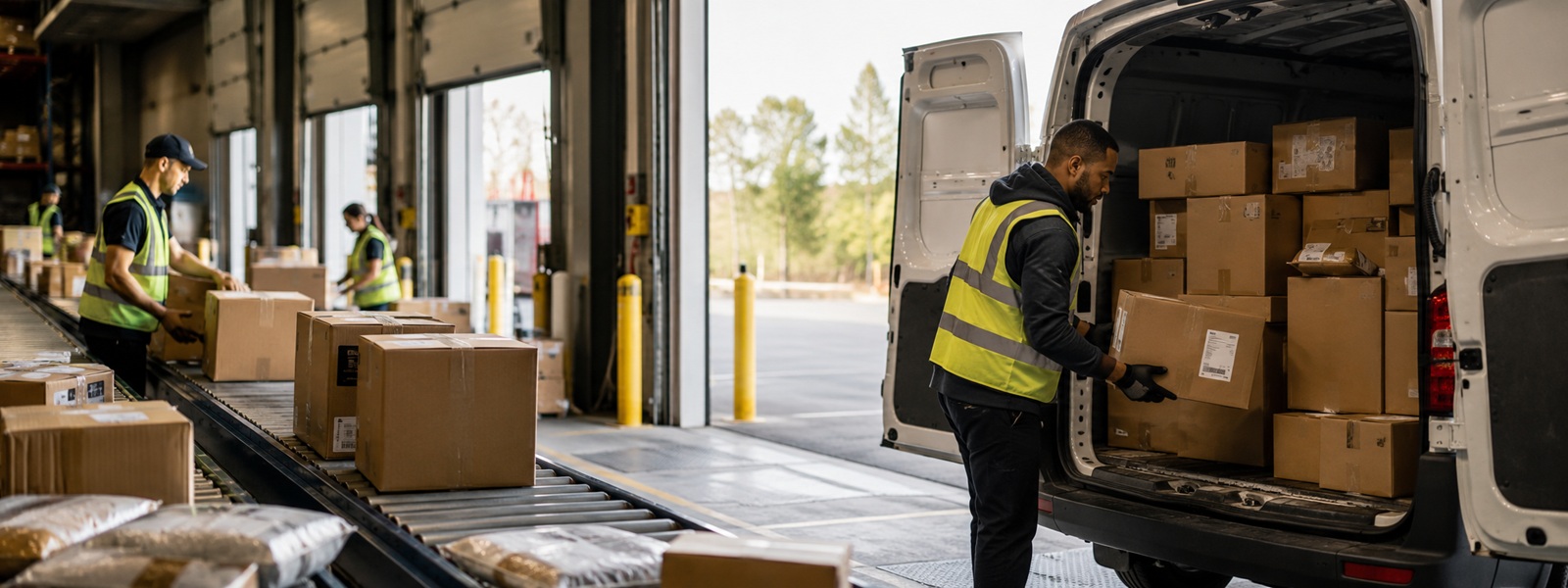
Every successful delivery begins long before a driver leaves the depot.
Behind every parcel is a carefully coordinated sequence of receiving, sorting, picking, loading and dispatching. If delays occur at any stage, they can quickly affect delivery schedules, customer satisfaction and operational costs.
The Importance of Flow
The highest-performing fulfilment centres focus on maintaining continuous movement.
Reducing unnecessary handling, improving loading schedules and coordinating warehouse activity with transport planning helps ensure parcels move efficiently from inbound deliveries to outbound vehicles.
Visibility Across Every Stage
Warehouse Management Systems, Transport Management Systems and real-time dashboards are providing managers with complete visibility across warehouse operations.
This enables bottlenecks to be identified before they affect customer deliveries while allowing resources to be redeployed quickly.
Collaboration Between Warehouse and Transport Teams
Increasingly, warehouse and transport operations are being managed as one integrated process rather than separate departments.
Shared data, AI-assisted planning and live operational visibility are helping businesses synchronise fulfilment with vehicle departures, improving productivity across the entire delivery network.
Looking Ahead
The future of parcel delivery will depend not only on faster vehicles but on smarter operations inside the warehouse.
Businesses that eliminate bottlenecks, improve visibility and integrate warehouse activity with transport planning will be best positioned to deliver the speed, reliability and efficiency that customers increasingly expect.